
The Performance of Healing
Why recovery stories can't replace research and care

The dreaded Weekly Report pops up on my phone. “Last week, you averaged 7 hours, 37 minutes of screen time per day on this device.”
What comes up for you when you read this message?
Maybe it’s, oh god, me too.
Or, you should see mine!
Or… no wonder you feel like sh*t, you spend half your waking hours on a handheld device, taking in more information than a medieval peasant did in their entire lifetime.
(That last one is me.)
Never mind that when I was “well,” I spent more like… 12 hours on my phone, computer, and TV, often at the same time.
Never mind that I’ve stayed within my Visible budget of 7 PacePoints every day this week, which has required equal parts discipline and distraction.
And never mind that increased screen time may suggest an improvement from taking low-dose naltrexone (LDN) for brain inflammation — though I truly have no idea, because I am a guinea pig and my GP is a drug dealer in a white coat.
No matter how much compassion and love I develop for myself in illness, my internal dialogue questions whether I could have done better, and how. Thankfully I’m getting better at creating distance between myself and my thoughts, and I hear this for what it is: internalized shame.
Both able-bodied and disabled people learn to live with shame. There’s embedded shame we carry from childhood, financial shame driving our late-stage capitalistic society, and the overwhelming shame of the media machine. Everyone eventually suffers from the insidious belief that our value is tied to normative beauty, ability, and productivity (or lack thereof).
On top of these foundational drivers, people with disabilities face additional structural and systemic issues, such as lack of inclusion, ableist policies, and gaslighting from medical professionals. We are used both as “inspiration porn” and as scapegoats, particularly in times of political unrest and economic anxiety.
Before crashing into severe chronic illness, I channeled my shame into disordered eating, people pleasing, perfectionism, and decades of doing, doing, doing. In my role as a creative director, I resented teammates who couldn’t keep up. I held the myopic view that if I could succeed, with all my limitations and trauma, then their inability had to be a choice, and a flaw. What I’ve learned is that even if my inherent privilege of being raised upper middle class was taken off the table, my workaholism didn’t make me a better person. It was an unhealthy coping mechanism fueled by cultural conditioning, corporate validation, and a need to feel safe.
Unfortunately, the chronic illness community isn’t immune to creating shame, either. Shame bounces around and divides the very spaces we turn to for comfort and commiseration. The first thing I noticed when I became chronically ill and online was that there were sides, and aligning yourself with one meant you’d get better, and the other meant you’d be sick forever. It was pretty obvious which outcome I wanted. Not only do I hate feeling unwell (seriously though, who doesn’t?), but I also believed the resolution to the shame of my dynamic disability would be in healing. I didn’t realize that the race to the top, and to heal were two sides of the same coin.
Recovery stories around “CFS,” long covid, fibromyalgia, and other underfunded conditions can claim to be empowering while capitalizing on internalized shame, offering followers the help they supposedly “need” to heal themselves, which is not only contradictory, but something that would be unheard of for any other serious illness. Strategies usually involve “mind-body” work, including relaxation techniques, nervous system regulation, and “brain retraining.”
For the record, while these strategies have helped me manage my stress and stabilize my baseline, I haven’t managed to resolve my biological condition by using them. Conversely, the message that everything was based in the nervous system led me to misunderstand other issues (iron deficiency and MCAS) that I’ve since been able to manage with diet, supplements, and over-the-counter medication.
This is one of the reasons I’ve slowly drifted away from the chronic illness community on Instagram, where anyone with a string of several good months can purport to have discovered the answer (I relate to this), and almost everyone who has recovered—whatever that means to them—is trying to sell you something.
When hopeful disciples fail to replicate results, we often internalize the failure rather than questioning the person or program itself. We might take on another layer of shame, believing that we aren’t trying hard enough, that our bodies aren’t responding the way they “should,” or worst of all, that we’re broken. The media, friends and family, support groups, and random strangers on the internet might also reflect these beliefs back to us, reinforcing the pattern.
This quote from Long Covid SOS felt so true to me that it inspired today’s post:
Recovery experiences are important, but they do not show that one explanatory model or intervention will work for everyone. Long Covid is heterogeneous, and what helps one person may be ineffective or harmful for another.
For people with PEM or PESE (Post-Exertional Symptom Exacerbation), excessive activity or unsuitable treatment approaches can trigger relapse and prolonged, sometimes permanent, baseline deterioration.
People living with Long Covid and ME/CFS deserve rigorous biomedical research, evidence-based care and accurate communication. People with ME/CFS have been gaslit for years by pseudoscientific claims, and it is long overdue that stopped. The science has more than caught up with this outdated narrative.
At this point, I’m apathetic about recovery stories. To me, it feels like explaining how you made a million dollars. I’m happy for you, but your story is irrelevant to me. This review of HBOT from Lexi really drives it home for me. It’s been meaningful and inspiring to see her content evolve with experience over the years, and I believe she’s demonstrating the type of voice we need more of in this space.
I’m grateful for the ones who share their experiences and management strategies in realistic, compassionate ways. My hope lies in the peace and joy I’m able to create between flares and within my personal energy envelope, while I work on piecing together my own individual puzzle. Not everyone has the privilege or desire to spend years of their lives on a hamster wheel of unproven treatments and tools. And that, friends, is why we need real research and care for Long COVID/ME.
Further reading
Wellness Looks Different for Everybody by Aidan. Excellent take on “why we need to stop measuring health by productivity, performance, and what the body can accomplish.” Aidan writes —
“There is strength in knowing your limits. There is strength in adapting. There is strength in continuing to care for yourself when the outcome is not a transformation story, but simply the ability to keep going.”
More Than A Prayer Request, by Sam DeCosmo. Beautifully validating piece on “why chronic illness is never a moral or spiritual failure.” I felt this one to my core, the mostly well-intentioned external pressure to be well, to be enough. Sam writes —
People living with chronic illness don’t need to earn compassion through perfect faith, perfect positivity, or perfect perseverance…Sometimes healing comes. Sometimes it doesn’t. But everyone deserves to be seen, believed, and loved.
I’ve hidden parts of myself my entire life. It's time to share the full picture. by Christina | one patient’s pen. Highly resonant personal post. Christina writes —
“That’s the problem with living up to an image that’s been created in your mind, one that isn’t grounded in reality.. it’s built on glass. And as time goes on, it becomes increasingly more difficult to maintain. So, it’s time for me to break it.”
And a glimmer ✨
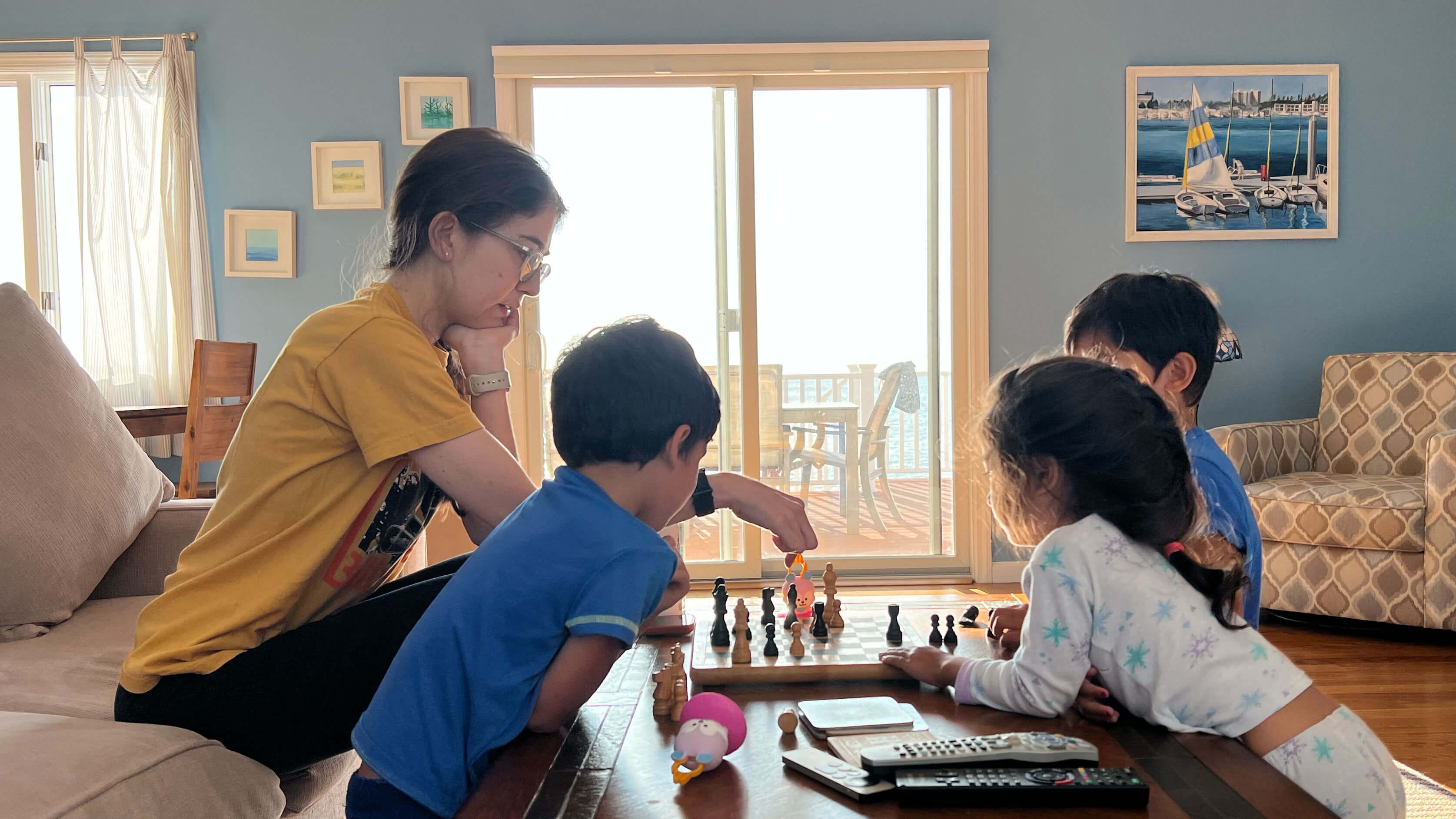
My bestie from college brought her family to visit this weekend. She and her husband have three adorable, respectful kids under 8 years old, and I finally got to meet their two youngest in person. We ordered takeout, played chess and Apples to Apples, spent some time at the beach, and took naps as needed. Her care and understanding gave me a safe place to land, and they all brought so much joy and fun to the weekend.
The world might be going to hell in a handbasket, but we have each other — never underestimate the impact you can have on a friend.
Thank you, as always, for being here,
Lisa
Yesssss...so thrilled for every recovered person. So unthrilled for everyone who now has yet another HAVE YOU TRIED to add to the heap (yes, seven different programs, thanks). Gimme gimme SCIENCE
I’ve also left the worlds of ME and especially Lyme behind. It borders on lunacy at times. Would you think MS or syphillis could be healed with meditation or drinking colloidal silver until your mouth turns blue?
I was very vulnerable to this BS for a time but I don’t think it’s a coincidence that I’ve improved since leaving that toxic space.