
Becoming Aware
On family history, social responsibility, and Long COVID

I’m relieved to be posting this one, after a glitch wiped most of it from my Substack drafts last month. Luckily, I was closing a bunch of browser windows recently and discovered the draft in full—hello, silver lining of tab hoarding! It’s also possible that having the draft open in multiple tabs was the cause of said glitch, so be mindful and back up your work, friends! Okay, without further ado…
This March, I felt well enough (emphasis on the enough) to take a city-bound train and village-bound N-train to SRFF NY, the Socially Relevant Film Festival. Dave and I met up with my family to see Olas de Recuerdo (Memories of Salt), a documentary directed and edited by my second cousin, Naomi Garcia Pasmanick.
Memories of Salt tells the story of our extended family in Galicia during the Spanish Civil War. According to the United States Holocaust Memorial Museum, “the Spanish Civil War (1936–39) was the bloodiest conflict western Europe had experienced since the end of World War I in 1918. It was the breeding ground for mass atrocities. About 200,000 people died as the result of systematic killings, mob violence, torture, or other brutalities.” Our family emigrated to New York after enduring hunger, persecution, and loss while resisting fascism under Franco. It’s a heavy, timely topic. I find it unimaginable that this could have happened in my grandparents’ lifetime, and even more so that history seems to be repeating itself around the world today.
Growing up, our family’s history was never offered freely. While other families were like an open book, ours seemed to be shut and stored away forever. I always chalked it up to the multiple language barriers, with my abuelos still speaking mostly Gallego, my mom retaining enough Spanish to facilitate less complicated conversation, and my intermediate-level Spanish rarely jumping off the page and into my mouth—even then, it was usually reserved for shaky school exams. When my abuela was still with us, my very non-Spanish-speaking dad would talk to her in gibberish to make her laugh (laugh is a strong word, it was more of a husky chuckle).
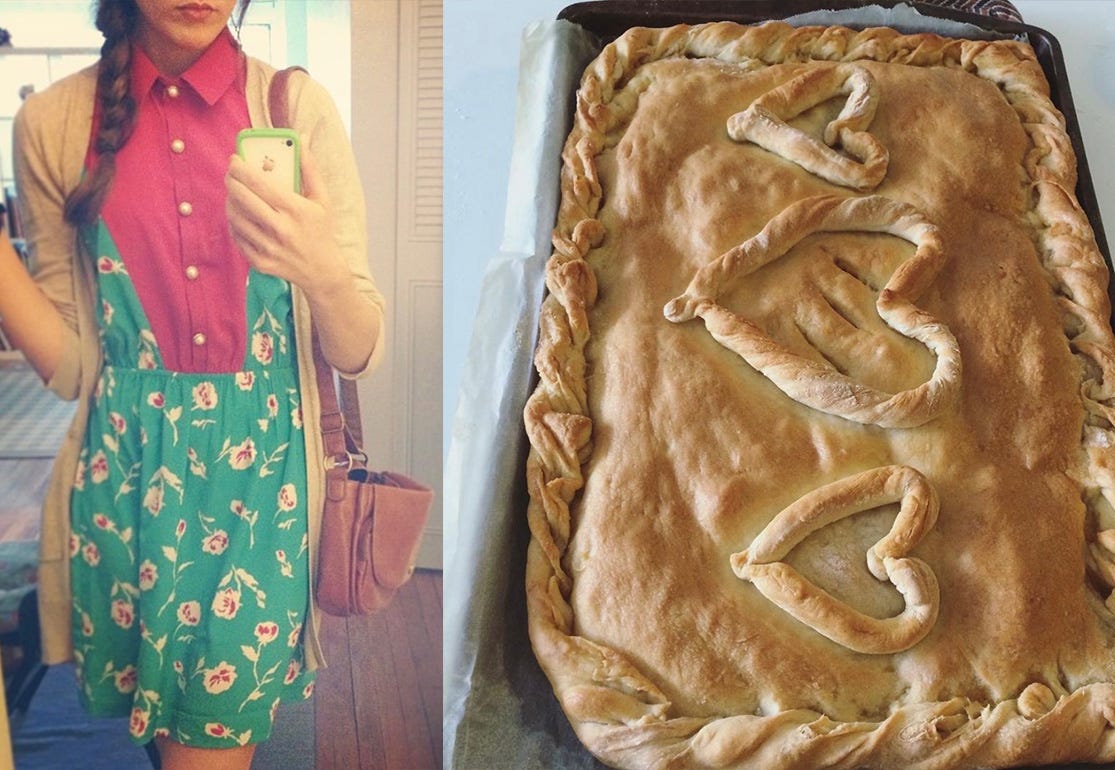
Once, my abuela fondly suggested that my braided hair and buttoned collar looked “prewar”—“she means the Civil War,” my mom clarified. “Thank you, that’s basically what I’m going for,” I joked, not knowing how to dig any deeper.
I presented my abuelos with an Empanada Gallega, a savory pie the size of a sheet pan, for their 66th anniversary (yeah, wow). I had diligently learned the recipe while spending a week with our family in the traditional fishing village of Moaña. My Americanized attempt was filled with stewed peppers, onions, and canned tuna—a far cry from my abuela’s famous cooked cod or the mejillones of their village. She deadpanned “a little dry” (so that’s where I get my sense of humor from) and finished her serving. Her clean plate was less of a compliment and more of a sign that she loved me and was proud of me. These things transcended the language barrier.
Through Naomi’s documentary, I gained more context around our generational disconnect. Their traumas were too great to speak about, let alone translate. To quote Pope Leo XIV, “war does not solve problems; on the contrary, it amplifies them and inflicts deep wounds on the history of peoples, which take generations to heal. No armed victory can compensate for the pain of mothers, the fear of children, or stolen futures.”
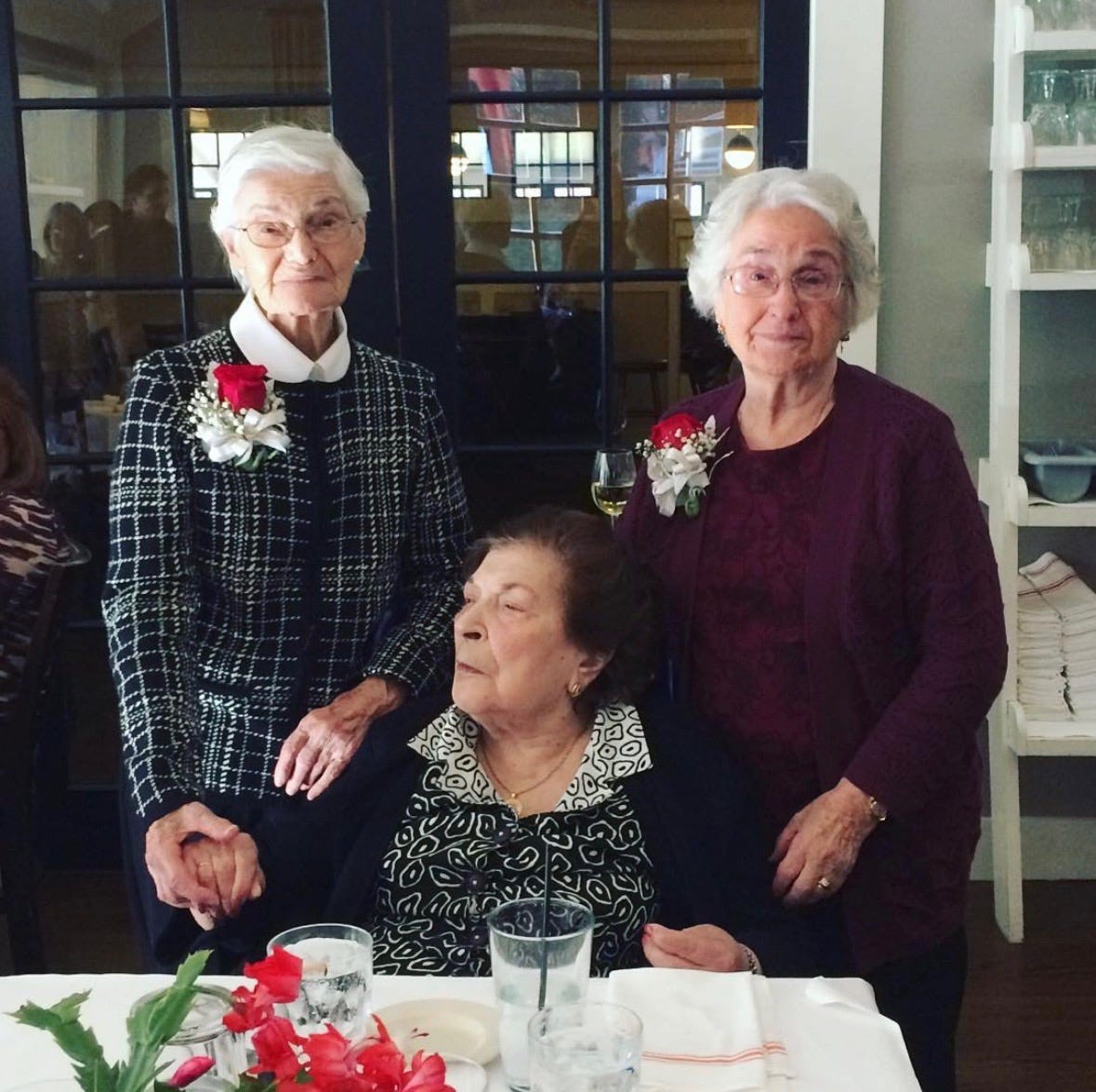
The violence and public humiliation our family faced was enough for them to leave their home country and start over. Our great grandmother came to the US with her twin daughters—her two young sons (who would be my abuelo and great uncle) were to follow later. They survived and moved forward for the next generation. As is the case with many immigrant families, my abuelos expected their four children to attend top universities, each on a full ride. Our great uncle Pep, who never started a family of his own, left his life’s savings to us grandkids to further our education and futures.
Uncle Pep’s last gift changed the course of my life. I was able to make a modest down payment on a studio apartment in the up-and-coming neighborhood of Ditmas Park, Brooklyn. I reconnected with the man I considered to be my “twin flame,” who, as “fate” would have it, also wound up in that neighborhood. We got married, and I experienced some of the highest highs and lowest lows of my life. While my family had done their best to move on from the hardship they experienced, and spare us from anything close to that kind of life, my choices evidenced a reverberating impact through time, and set me up to heal things I hadn’t even realized were a part of me.
Part of my recovery from PTSD and severe Long COVID has involved addressing generational trauma, the effects of my family’s hardship encoded into my DNA. Through life-changing energy work with a dear friend, I’ve been able to access a softness that feels new not only to my body, but my family line. While Naomi was in the process of making Memories of Salt, I also experienced a moment of connection with the past. In a deep meditative state, I had a vision of Uncle Pep standing in my doorway, chains draped over his outstretched arms. I could feel that we shared deep-seated beliefs of scarcity and unworthiness. I expressed my heartfelt gratitude to him, tears streaming down my face, and released the burden of his experiences, for both of us. I hope wherever he is now, he’s lighter, like I am.
After the film festival concluded, I did my best to feel Spring’s sunshine on my face, exchange warm greetings with Naomi and other family members, and taste the pleasant heat of a fresh ginger-turmeric tea at lunch. I tried to be in the present moment, and focus on the life I’m lucky to have been given, by the grace of courageous relatives I’ll never have the opportunity to know.
But like all great art, Naomi’s film stuck in my gut and refused to let go. I reflected on my disconnect from injustices around the world, how little I’ve actually done in comparison to how much I feel. How the path I took to become “worthy” helped nobody at all—not people desperately in need, not my parents whose guidance I resented, and most certainly not my body, which ultimately kept the score. Before I carried Long COVID like a cage around my chest, I carried a heavy sense of inauthenticity, as if each step I took led me down a path parallel to the one I was supposed to be on.
The further I got in life, the further I felt from discovering my purpose. I wound up “stuck” in a career that wasn’t my calling, that took up all my time and left little energy to question the status quo. The COVID-19 lockdown and racial reckoning of 2020 was a brutal awakening. I realized I was on the privileged side, the White side. Wasn’t that why my family left Spain, so we could have a chance at a better life? Still, what was I doing to help others get their chance at the “American Dream?” Had I been feeling my separation from our roots of resistance all along?
As Dave and I meandered away from my family at the cinema, he discretely and delicately supported the weight of my body and whirring mind. I pulled up an app to figure out which train would take us back to the lovely Long Island home I bought with my life’s savings, including that fateful gift from my great uncle Pep over a decade ago. But even simple logistics were too much to handle after six back to back, thought-provoking films. Despite my best efforts to “calm down,” I felt the pressure and frustration building. I became furious at myself. My broken brain. My combination of privilege, passivity, and powerlessness.
I started reverting back to my old ways, weaving in and out of cheerful tourists, pulling Dave towards the train we “had” to make to get home at the “right” time. My body protested. I didn’t care. I finally collapsed into my seat on the train, unable to eat the vegan cookies we had joyfully bought for the ride home. I was exhausted, and nauseous, and enraged, and sad, and wow, feeling things. Hey self, remember last year when we couldn’t feel things? When we didn’t know how to channel that into writing?
I opened my notes app and realized for all my fatigue, I had plenty to say. Here’s what I wrote. It’s a heavy, timely topic.
Imagine…
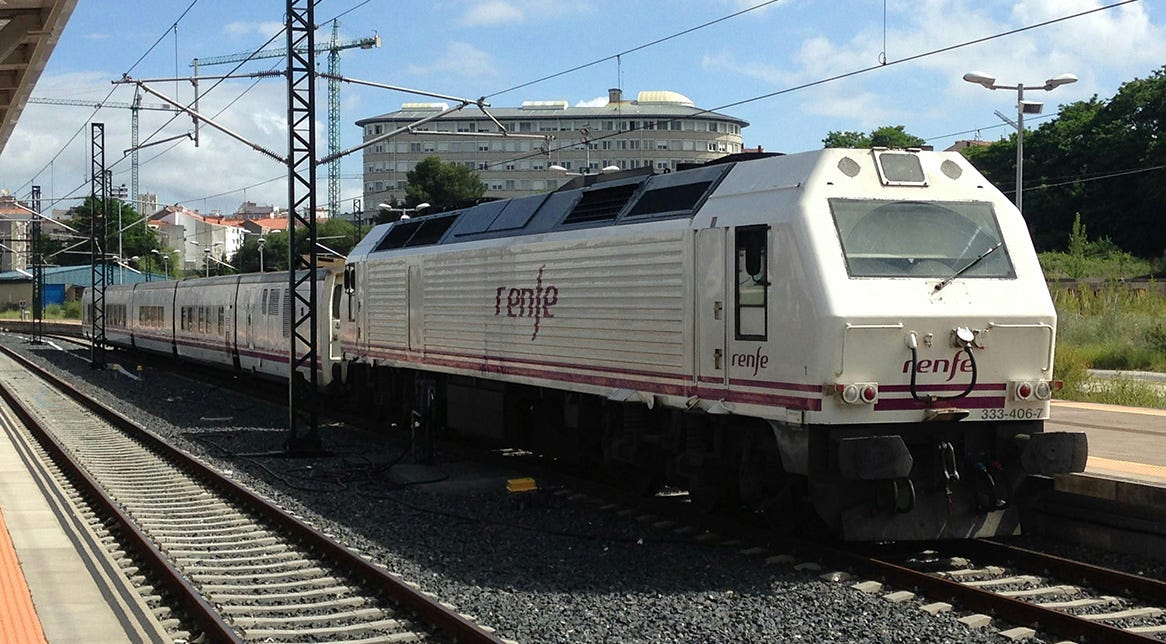
You’re riding a train through the history of your life, each scene passing by in the window. You take your first breath and let out your first cry. You’re passed around at parties, making people smile. You learn to roll, and sit, and walk, and talk, and sing, and make music, and dance. The train starts to move faster—you’re in preschool, first grade, and then before you know it, sixth. Classes, books, teachers, friends, sports, activities. First kiss, first breakup, graduation, college—that whole thing’s a blur. First job, first promotion, first apartment you actually like, hours of commuting, years of excitement and drudgery spiral off in a dizzying helix. Maybe a marriage, kids growing up like you once did.
Then, BAM. Train stalls.
There’s a delay—no, full stop. Something’s broken down. You’ve broken down. You look around, seeking reassurance. The florescent lights overhead only burn your eyes. There’s no announcement, no information. Hubristic posters at the front of the car read, “Everything’s Fine!” and “It’s All In Your Head!” A conductor rushes by, and you murmur, how long will we be here? You meant to yell after them. You meant to follow them to the next car. But you’re suddenly feeling impossibly heavy—could you be coming down with the flu?—it’s been a long day, one of many.
The first few days, of course, you feel that you must get the hell off this train. You’d try just about anything—you’ll fix the damn train yourself! You have places to be, people to see. But weeks pass on the stalled train, months, even years. Are there really only 365 days in a year? Every hour feels like a day. That’s 8,760 “days.” Days of silence, days of panic, days of claustrophobia, days of raging, days of bargaining, days of sobbing, days of acceptance, days drowsily spent watching the birds flitting outside your streaked window. Life isn’t so bad really, when there are birds.
Will you ever feel free again?
Some days you literally itch with impatience. If the train would just move an inch, you might have some hope. Can you even remember what hope feels like? Other days, the train rolls a few feet, and you rejoice. Forward motion! Never mind that the film of your life is grinding in place on rusted gears. Never mind your hunger for things not on the train, like chocolate, coffee, friends, exercise, and “normal” life experiences.
Finding joy in the now helps with the waiting. You’re still alive, and it’s not nothing. There’s meditation music, and podcasts, and audiobooks, and squirrels, and trees inosculating, though opening your heart to them also makes you vulnerable to the larger moments you’ve missed, and are still missing. You try numbness—it protects you, but dims your eyes and spirit.
Most days you’re lonely to your bones. Being on the train is all you have to talk about, but you can’t talk about being on the train. When you call your loved ones, they don’t want to talk about the train. They want to talk about things that mattered before the train, before you became the person you are now, a person stuck on the train. The conductor makes routine announcements from the safety of his caboose, mostly avoiding the state of the train.
When you finally connect with other passengers, all they want to talk about is the train. At first, this is validating—but after a while it only makes you feel more exhausted, the acknowledgment and reality of your shared situation. Hearing their stories makes it that much more real, and terrifies you all over again. The realization and grief washes over you. You’re at the end of the line. At least for now. We’re hoping a bus comes along at the next stop.
This past year, I’ve done everything in my power to heal physically, mentally, and emotionally from Long COVID, and I’m still not better, better. I’m grateful for the lessons I’ve learned and the milestones I’ve reached. But with all of my work and privilege, I still can’t hop on a bike, go for a jog, carry a basket of laundry up the stairs, or work a full day at my laptop. These things I took for granted all my life, doing day after day after day, I can’t do once without consequences.
The day after I got back from the city, coming down hard, I realized it was Long COVID Awareness Day (March 15th—mark your calendars for next year!). And so I committed to posting this when my capacity allowed. Millions of people are still not better. I refuse to be quiet about it when what we need is awareness, research, and funding. I may have found one of the causes of my lifetime, better late than never.
Earlier, I wrote that I’ll never know my relatives who bravely stood by their beliefs nearly a century ago. I take that back, as I begin to know myself and what I stand for. They’re in my blood, my bones, my tears—the salt. I hope I make them proud, my way.
Thank you for being here,
Lisa
And yep, you do make your ancestors proud!
Beautiful read ❤️