
Tightrope Walking
A day in the life with Long COVID

Hi friends,
I’m writing this from the depths of yet another blizzard in New York. Winter’s gentle invitation to go inward has solidified into a gleaming white wall, turning the house into an island of introspection. The side road that leads to our driveway has not yet been plowed. We are quite literally stuck inside. I want to avoid the integration of emotions from the past few months—years, even—but I have no choice. I’ve been feeling isolated, emotionally exhausted, and resistant to shifting out of fight-or-flight.
Dave and I watched a couple new movies, Send Help (2026) and If I Had Legs I’d Kick You (2025). Each was nothing like I expected, and gave me a mountain of food for thought. The first explored power and the patriarchy, leaving me quiet for a good few hours, and the second was a surreal, unflinching look at motherhood, requiring approximately two business days to recover. I usually prefer to go in blind and get rocked, but I think I’m officially too rocked to rock lately. I’ve retreated into crafting and catching up on Love is Blind, hoping to cocoon myself back to functioning.
The post I had waiting in my drafts is titled “feeling grateful,” and I know I have been, for so much, and will be again. But if I’m being real, it just feels laughable lately. Describing “a day in the life with Long COVID” is more true right now. It’s what’s getting reflected back to me in winter’s mirror. That said, I promise Spring is coming (I keep telling myself that, anyway) and I’ll return to more uplifting topics in time.
Quick housekeeping: I’m going to mention a few things that help me on a daily basis—I’ll include referral links at the very end for easier reference.
Without further ado…
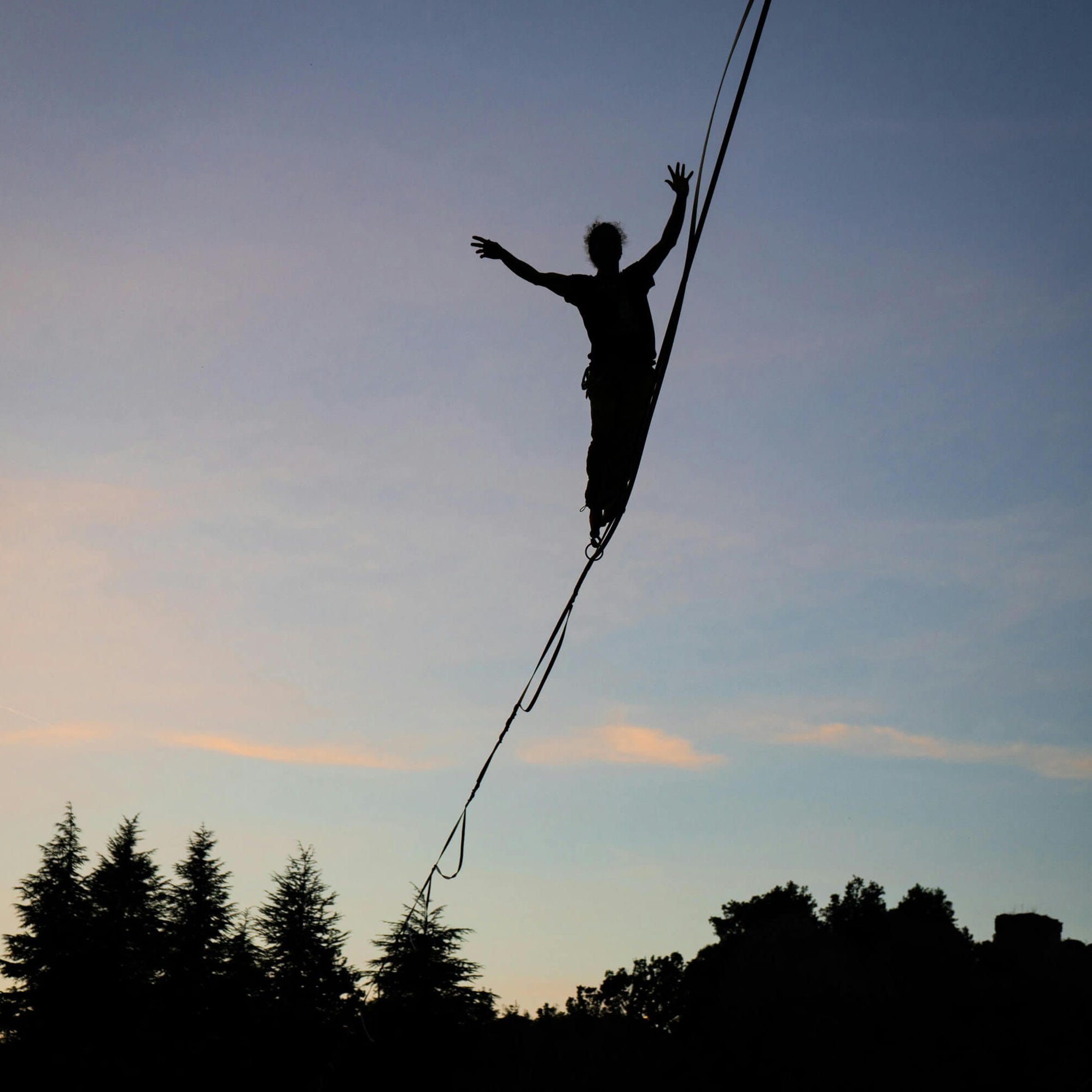
Having Long COVID is like walking a tightrope, every day of the week.
The first step of the day, the rope goes wild. I call this the “wiggly wobblies.” My heartbeat feels fast and slow at the same time, like racing through mud. Historically very much a morning person, who woke up ready and raring to go, I greet the day in a groggy fog that will never feel familiar. My former self taunts me.

I use a wearable + app called Visible to get my “stability score,” which helps me determine what kind of day I’m going to have. The Visible stability score is based on heart rate, heart rate variability (HRV), and self-reported sleep quality, ranging from 1 (like a hard-hitting hangover) to 5*, or how I used to feel on any given Tuesday.
*Very specific note: for me, 5’s are usually too good to be true—we’re looking for slow incremental progress, not big unexpected jumps. These can mean the body is trying to recover from a large amount of oxidative stress, and require rest just like the lower end.
I’m usually able to intuit my score before I get it, but adrenaline can be misleading—sometimes the days I think I’m okay are the ones I have to watch out for. Getting a 2 has become the most frustrating, because I don’t feel like a 1, but if I don’t rest, I will wind up there and feel pretty horrible for a few days. I’ve tested this theory more times than I’d like to admit.
I know some may ask, do you really need a wearable, or my favorite, “is it a self-fulfilling prophecy?” I ask myself these questions, again, more than I’d like to admit. All I can say is, the weeks / months I’ve taken it off not to get in touch with my body’s cues, I’ve experienced a loss of capacity. So we’re sticking with it for now!
Anyway, all that is to say, my mornings are all about establishing balance, and setting myself up for whatever success is within my capacity that day.
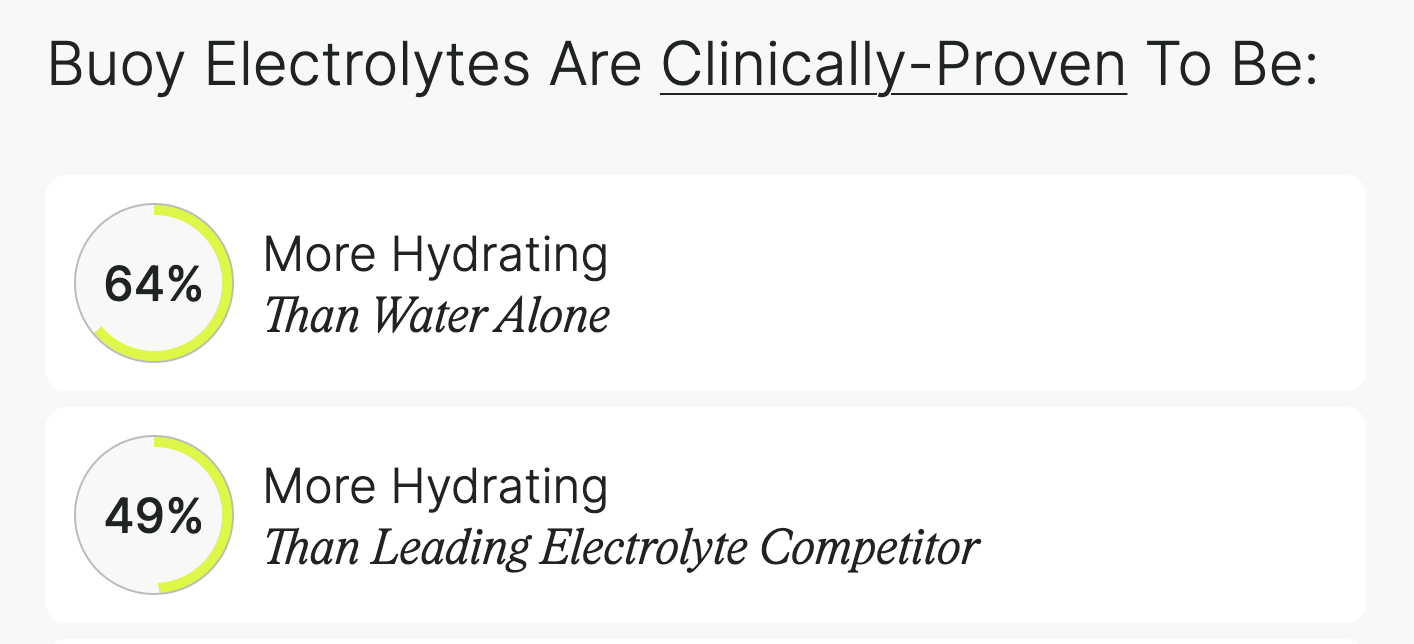
I get up slowly, as if I’ve just had a massage, or more appropriately, my blood drawn. My default is dehydration. No matter how well I hydrate the day before, no matter what temperature it is in the bedroom, I wake up really, really thirsty. I used to kick off the day with a coconut water before getting out of bed, but I find that in the winter my stomach does better with a cup of hot water with Buoy electrolytes.*
*It must be said—Buoy is the absolute standard. They have a 35% lifetime discount for anyone with a chronic illness, minimal questions asked. They don’t add any sugar, which is really important for blood glucose issues with Long COVID. I was nauseous all the time before I started using their digestion drops and rescue sea salt. I’ve gifted Buoy to friends with chronic Epstein-Barr, Fibromyalgia, and Ehlers-Danlos Syndrome (hEDS).
Before I even get up to use the bathroom, I put on my compression socks for support. I’ve developed orthostatic intolerance, which means my body can’t regulate blood pressure or heart rate properly upon standing. Compression stops blood from pooling in the lower body, pushing it back up to the heart and brain, where we need it to be. I’m pretty sure proper electrolytes and compression socks are the reason I’ve never passed out from POTS. They also stop my body from working so hard, which means I can do more. The less often my HR jumps to 120-135 from a resting rate of 58-70, the more I can do with my energy envelope, or current capacity. I’m all about optimizing the energy I can use before my mitochondria start poppin.’
Visible helps you set a “PacePoints Budget” that reflects your current energy envelope. I’d guess that my energy expenditure pre-Covid would have amounted to around 20-30 points per day. In 2024, my nervous system shut down, I tested positive for reactivated Epstein-Barr, and my capacity plummeted to a budget of 2-3 points. I needed a rolling chair to get from the twin bed in my former office to the kitchen, and lived off of Cheerios and pre-prepared foods. When I had the energy, I cleaned myself with adult wash cloths (would recommend these). Over the course of that year, I was able to build back to a capacity of around 10 points. This included household chores and outdoor excursions, amounting to an average of 4,000 steps per day. After starting part-time work again, my budget is currently around 6-7 points.
You might be wondering, what causes this? For one, my autonomic nervous system is busted. This does not mean I’ve had a nervous breakdown. It means my body has been irreparably worn down by some rough coping mechanisms—including lifelong emetophobia and anxiety, disordered eating, overworking, an abusive marriage, a highly stressful pandemic relationship with a conspiracist (granted, he wasn’t all wrong, just in the ways that mattered to my life personally), and raw-dogging a debilitating, multi-system virus—and I need some time to convalesce. Honestly, I need time to rest after writing / rereading that sentence, let alone living it.
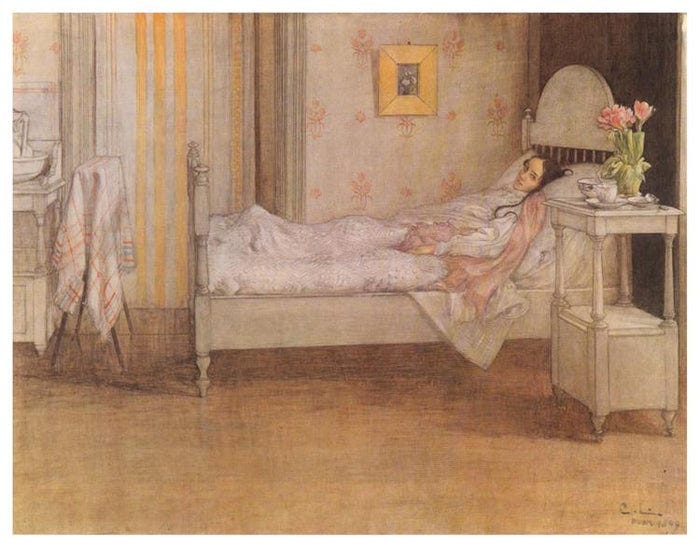
As I continue to live my life in the wake of post-viral fatigue, my system is triggered by, well, everything. Foods I used to love, work I could do in my sleep, activities that felt like breathing…back when sleep and breathing came easy, that is. I feel like an overworked project manager, if the project was getting my body to run at 50-65%.
I also often feel like I’m part scientist (N-of-1 trial, baby) and part doctor-in-training.
I’m learning how much histamine plays a role. Turns out histamine’s not just something that causes allergies in the spring—it’s a critical chemical messenger, helping the brain control the autonomic nervous system, affecting breathing, heart rate, and temperature regulation. Covid can trigger Mast Cell Activation Syndrome (MCAS), a condition in which mast cells (white blood cells in tissues) go into overdrive, excessively releasing histamine and other chemical mediators.
Our bodies have four types of histamine receptors—Long COVID especially interacts with the first two. Every day, I make sure my meals are free of histamine (most notably, spinach and tomatoes) and histamine liberators (most depressingly, chocolate and wine). Every night, I take Zyrtec (an H1 blocker), and I add on Pepsid (an H2 blocker) if I experience a significant trigger (physical, emotional, environmental). Planning sucks, but beats waking up at 2am whimpering with stomach cramps or gasping for air through congestion that makes me google “do I have cystic fibrosis.”
I’ve learnt more than I would ever like to know about neuroinflammation. I manage the amount of time I spend on screens, having conversations, and being intellectual (aka, myself). Mental overexertion inflames my brain, which stokes the flames of my anxiety, and brings out the ANTS, or automatic negative thoughts. ANTS are harder to feel my way out of, and take a lot of energy, creating a cycle. I take Effexor, an SNRI to help keep these at manageable levels, because saving energy is key for living my life.
While I’m no longer housebound—one of the things I’m most grateful for—I spend most of my time at home, even when it’s not 17°F and snowing outside. I emerge for sporadic outings where people see me showered, smiling, and high on life. They tell me I look GOOD, and I try not to respond, “thank you for noticing, I watch a lot of makeup tutorials and have learned the correct way to apply my blush.” They don’t see the rest of the days, they don’t understand the rest of the days, and I don’t blame them for this. I won’t pretend it doesn’t sting that people don’t check in and dive in the way I used to do, but I never did those things with expectation. It was my comfort zone, the only way I’ve ever known how to operate. So I lean most into relationships with people who know how to operate that way too, and match energy for the rest. This is helpful for living within my limits and feeling more fulfilled by the life I do have.
I debated outlining this post by the hour, because I love a good organizational structure—but like all the other jobs I’ve ever had, each day managing Long COVID is truly different (wink). The tools I’ve collected in my toolbox no longer happen at the exact time I’ve decided they need to. They happen when I need them. I tap into my adaptability, my resilience, my creativity, prayer to some higher power, whatever will get me through these frustrating, painful, life-affirming days. I let go of the tightrope, if only for a moment.
Thank you, as always, for being here,
Lisa
Visible: Coming in at $20 per month, this isn’t exactly a subscription you forget about, but here’s $20 off the wearable if it’s something you’ve been wanting to try.
Buoy: This referral link gives you an extra 20% off on top of their chronic illness discount, and I get a 20% kick back too. 🤝
Compression socks: I love mine from Bombas!
Sooo good to read an update from you. At the same time, can hard relate to so much of this.
Soothing neuroinflammation has been such a big part of my journey too - I’ve written an entire pathway with that featuring as an intention for my book. (Looking for beta readers for that one once it’s been edited so if you’d love to look over that let me know).
It’s all pretty much a full time job. One that unnoticed, unwitnessed and unrewarded.
Glad you’re here. Giving voice to it. Bringing it all up into the light.
Captured it perfectly, and especially this nugget:
"I emerge for sporadic outings where people see me showered, smiling, and high on life. They tell me I look GOOD, and I try not to respond, “thank you for noticing, I watch a lot of makeup tutorials and have learned the correct way to apply my blush.” "
When you're sick, leaving the house is an EVENT, not just the third thing you did that way...so of course we gussy up more. I mean, sometimes it's all I can do to be there and I just go braless, but more often than not, sickies look paradoxically THRIVING when we actually get out.